Formed in 1998 by cellist Yo-Yo Ma and others, Silkroad Ensemble AKA Silkroad, is the musical performing wing of a collective project that fosters collaboration among artists of different traditions, promoting multicultural exchange. In 2020 Rhianon Giddens (Carolina Chocolate Drops) took over from Yo-Yo Ma as artistic director, but the project’s current tour finds the live ensemble headed by Chinese-born Wu Man, a master of the traditional lute-like instrument known as the pipa. On November 8 at 7pm, she will lead Silkroad at the Mahaiwe Performing Arts Center for a performance of “American Railroad,” which features music from the group’s acclaimed album of the same name. Wu Man answered the following questions via email. —Peter Aaron
You started playing pipa when you were very young, only nine years old. What attracted you to this very old instrument?
When I was in kindergarten, I went to the movie theater with my father. We saw a film called Ambush from Ten Sides, and in it, the great pipa master Liu Dehai performed. I still remember the sound—it was powerful, full of energy, but also so emotional. I asked my father, “What is that instrument?” and he said, “That’s called the pipa.” I said, “Wow, this uncle plays so well!” That moment really stayed with me. Not long after, my parents purchased a pipa for me. It was a very popular instrument in China, and they loved it too, even though they were not musicians themselves. That’s where it began—this connection to the sound, to the instrument. Eventually, I was lucky enough to study with Liu Dehai himself, and that childhood inspiration became a lifelong path.
Your first exposure to non-Chinese music came in 1979, when you saw Seiji Ozawa with the Boston Symphony Orchestra perform. Do you remember what music the orchestra played at the concert? What struck you most about the music you heard at that event?
I still have the picture in my mind so clearly, it was Beethoven’s ninth symphony, fourth movement, “Ode to Joy,” and “The Star-Spangled Banner,” the national anthem of the US, as an encore. The orchestra’s powerful sound and musical appeal completely overturned my imagination.
You are a founding member of Silkroad Ensemble, helping to launch the project with Yo-Yo Ma in 1998. What has it been like to be in this long-running and famously multicultural ensemble? To you, what makes Silkroad such a unique and important group?
Being part of Silkroad has been one of the great joys of my life. We come from all over the world—different musical backgrounds, different cultures, different generations—but we share this belief that music can bring people together. It's not always about blending everything into one sound, but about listening, respecting, and learning from one another. What makes Silkroad special is the way we constantly explore. We experiment, we take risks, and we embrace the unexpected. Every rehearsal, every tour, every project is a chance to discover something new—not only about music, but about each other, and about the world we live in.
How would you describe American Railroad, the 2024 Silkroad album whose music the ensemble will be performing at the Mahaiwe Theater concert in November?
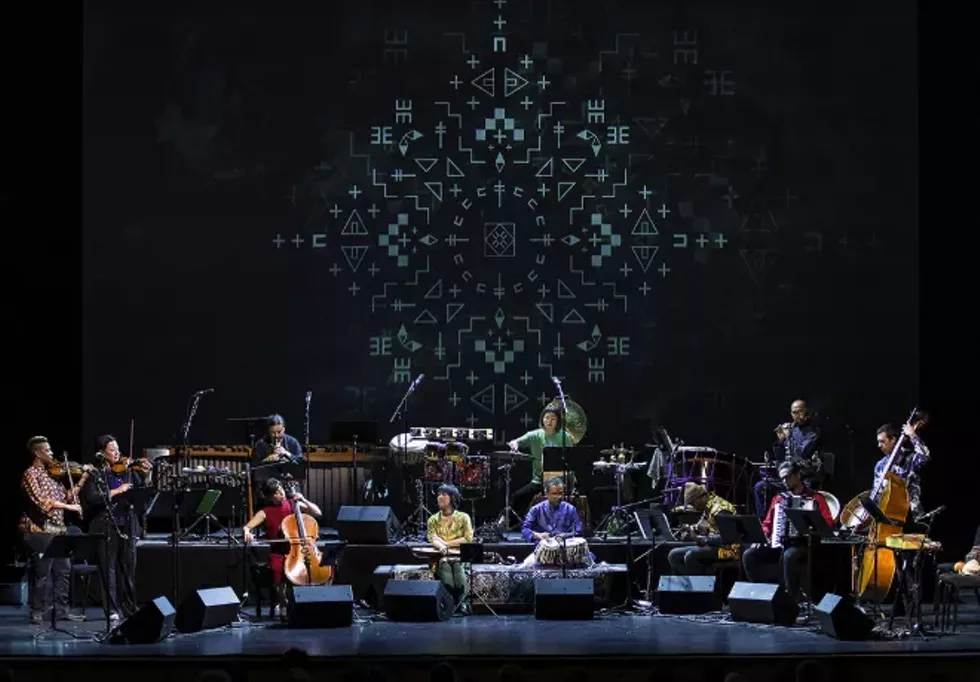
American Railroad is a very meaningful project. It was first imagined by Rhiannon Giddens, and it tells the stories of the many people—immigrants, laborers, Indigenous communities—whose lives were deeply shaped by the building of the Transcontinental Railroad. These voices are often left out of the history books, but through music we try to honor them and bring their stories to light. While the album and former tours featured work by Pura Fe Crescioni, Rhiannon Giddens, me, Maeve Gilchrist, Haruka Fujii, Sandeep Das, Suzanne Kite, Cecile McLorin Salvant, Niwel Tsumbu, Kaoru Watanabe, and Mazz Swift, this year’s tour features an eight-piece ensemble with instruments from China, India, Japan, Italy, and more. You’ll hear traditional percussion, pipa, suona, strings, guitar, and accordion—all weaving together like a moving train across time and culture. It’s a musical journey through history, and also a reflection on the present.
What do you most hope people feel, think about, and experience when they hear the music that you make?
I hope people feel curious—curious to hear something new, to open their ears and hearts to different cultures and instruments. I hope the music inspires them, like I was inspired when I first heard the pipa. I also hope the music helps people remember the many stories that have brought us to where we are today. Music is not only entertainment. It carries history, memory, and spirit. If someone walks away feeling more connected to that, then I think the music has done its job.